
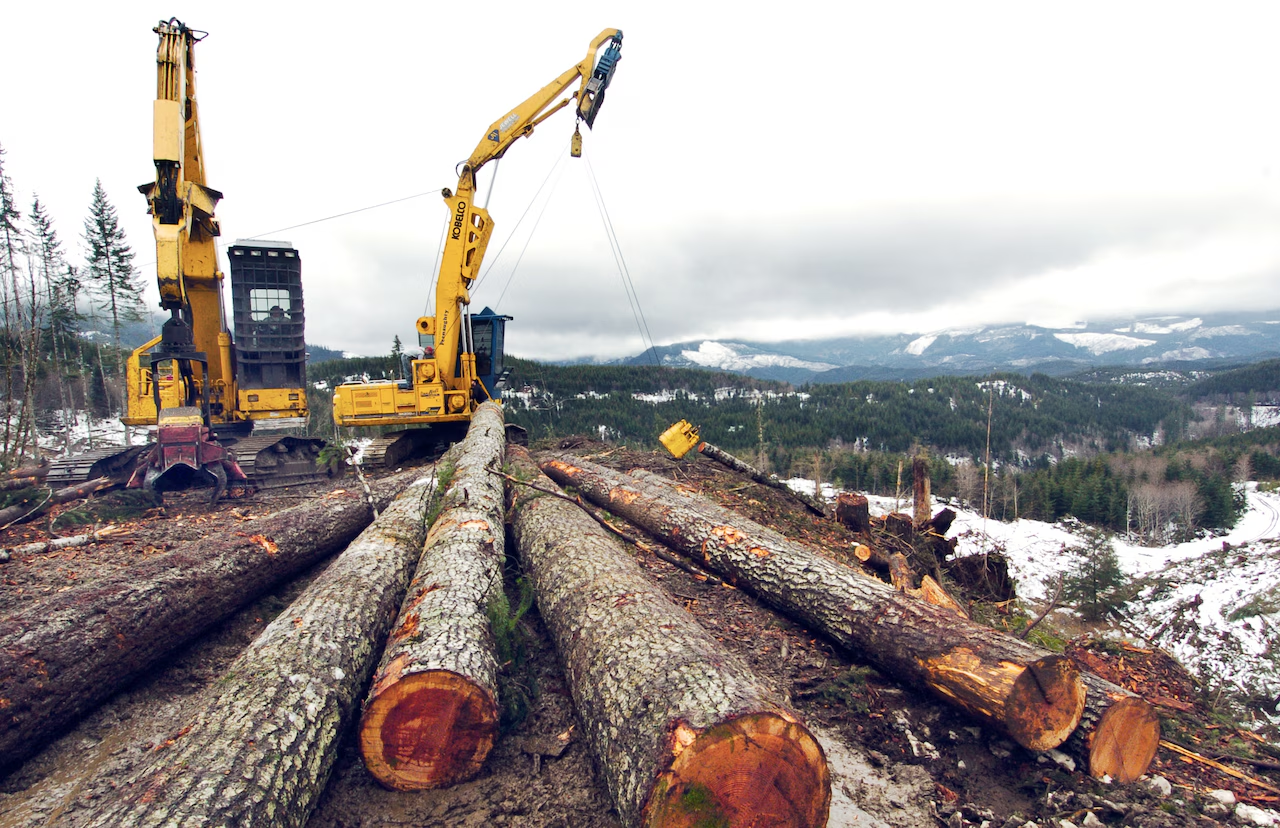
The federal government is taking steps that could significantly reshape forest management in the Pacific Northwest. In a recent announcement, officials confirmed that the Trump Administration Plans to Open 2.5 Million Acres of Oregon Timberland for Release, signaling a major shift in timber policy and land use priorities.
Federal Land Under Review
On Feb. 18, the Bureau of Land Management (BLM) revealed it is preparing to review and potentially revise management plans for approximately 2.5 million acres of highly productive timberland in western Oregon. These lands are considered some of the most commercially valuable forests in the world.
According to BLM Acting Director Bill Groffy, restoring timber production to earlier levels could play a key role in boosting local economies and addressing wildfire risks. He emphasized that President Donald Trump views stronger domestic timber output as essential not only for economic growth but also for national security and improved forest management.
The agency announced it will publish a formal notice initiating a public comment period beginning Feb. 19. Residents, stakeholders, and organizations will have until March 23 to share feedback on proposed revisions to the 2016 resource management plans, which currently limit timber harvesting across much of the region.
Understanding the O&C Lands
The land in question includes the Oregon and California Railroad Revested Lands—commonly known as the O&C Lands. These parcels, reclaimed by Congress in 1916, stretch across 18 counties in western Oregon in a distinctive checkerboard pattern.
Revenue generated from timber harvested on these lands is divided between the U.S. Treasury and the participating counties. For local governments, this funding stream supports essential services such as schools, libraries, law enforcement, and infrastructure improvements.
Industry representatives argue that changes are overdue. The American Forest Resource Council (AFRC), a Portland-based timber association, praised the administration’s move, describing it as a necessary step toward revitalizing forest management.
AFRC leaders contend that the 2016 management plans placed harvest restrictions on roughly 80 percent of the O&C Lands, reducing county revenues and allowing forests to grow increasingly dense. They argue that overcrowded forests contribute to heightened wildfire danger across the region.
AFRC President Travis Joseph stated that updating management strategies could create thousands of family-wage jobs, strengthen the domestic wood supply, and lower wildfire risks—while still maintaining sustainable practices. However, he stressed that achieving those outcomes would require modernizing current policies and embracing science-driven forest stewardship.
Executive Order Elevates Timber Production
The renewed focus on timber production follows an executive order signed by Trump in March 2025. The order formally designated timber, lumber, paper, bioenergy, and related wood products as critical to the nation’s economic and strategic interests. The administration has argued that previous federal restrictions contributed to America’s growing dependence on imported wood products.
While industry groups welcomed the initiative, environmental organizations have voiced concern. Advocacy group Earthjustice criticized the broader policy direction, warning that loosening harvesting restrictions could harm federal forests. Representatives have argued that Americans value forests for more than timber—citing recreation, clean air, and drinking water among their benefits.
A Long-Running Oregon Debate
The debate over logging in Oregon is not new. Tensions between environmental activists and the timber industry intensified in the 1990s over habitat protections for the northern spotted owl. The controversy culminated in the 1994 Northwest Forest Plan under then-President Bill Clinton.
That plan governed roughly 24 million acres of federal land across Washington, Oregon, and Northern California. It halted logging in millions of acres of old-growth forest to protect endangered species, especially the northern spotted owl. As a result, timber harvesting on federal lands across the region declined by approximately 75 percent.
The economic effects were significant. In Oregon alone, dozens of timber mills closed during the 1990s, and thousands of workers lost their jobs amid logging restrictions.
However, environmental outcomes have been debated. A 2021 study by the U.S. Forest Service found that northern spotted owl populations declined by at least 65 percent between 1995 and 2018, largely due to competition from barred owls rather than habitat loss alone.
What Comes Next?
As the Trump Administration Plans to Open 2.5 Million Acres of Oregon Timberland for Release, the issue once again places Oregon at the center of a national conversation about balancing economic development with environmental protection.
With the public comment period now underway, industry leaders, environmental advocates, and local communities will weigh in on how these forests should be managed moving forward. The outcome could shape not only Oregon’s rural economies but also the future of federal forest policy across the United States.

