
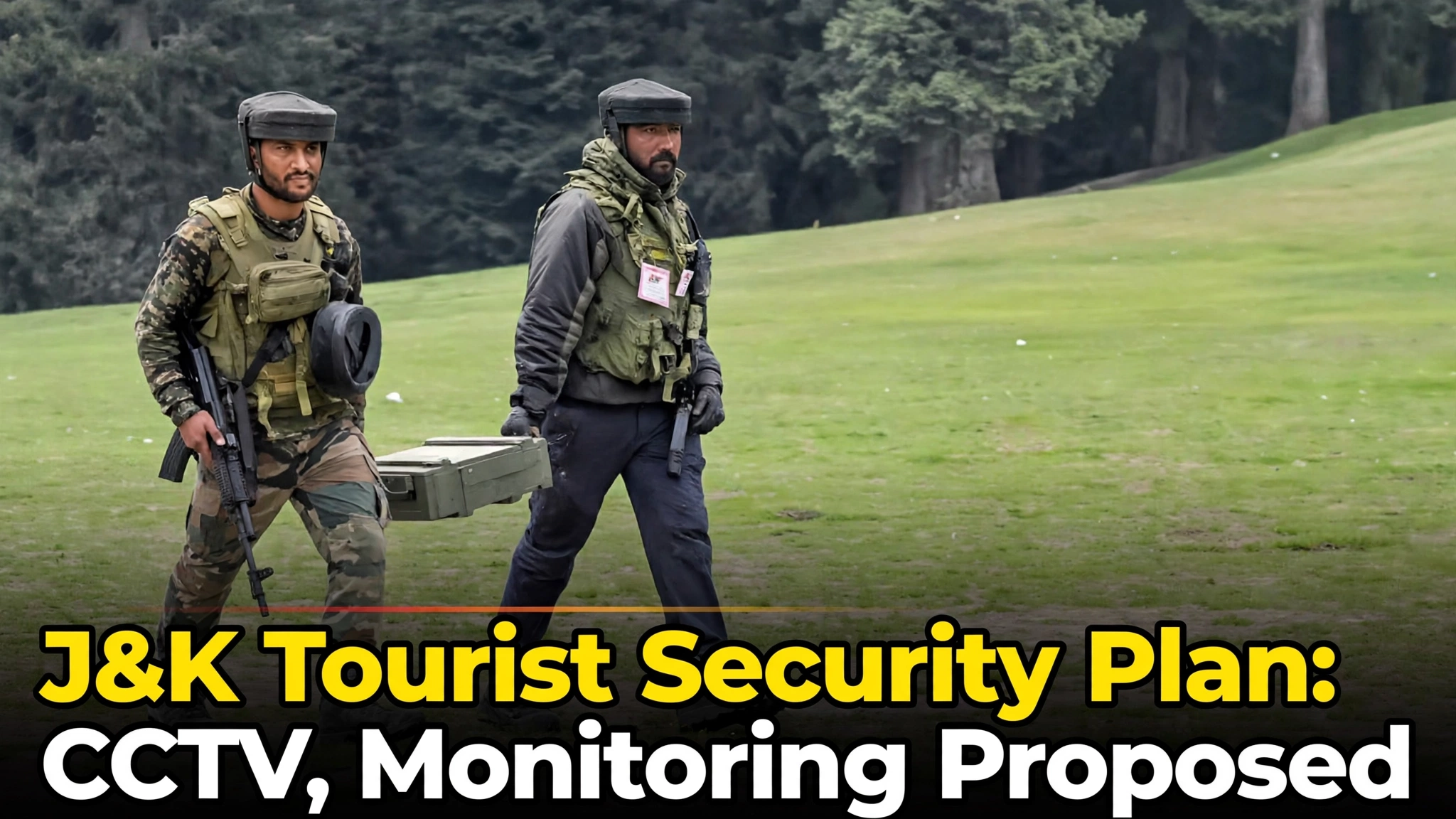
Jammu & Kashmir could see a major overhaul of security arrangements at popular tourist destinations following the Pahalgam incident. A parliamentary committee has recommended an integrated security framework covering major tourism hubs across the Union Territory, with an emphasis on technology, centralized monitoring and better coordination between security agencies.
The proposed measures include comprehensive CCTV coverage, centralized surveillance systems and clearly defined inter-agency Standard Operating Procedures (SOPs). The recommendations are aimed at strengthening preparedness before peak tourist seasons, when visitor numbers rise sharply.
What Is the Proposed J&K Tourist Security Framework?
The proposed framework seeks to move away from fragmented security arrangements and create a coordinated system covering major tourist locations.
Key recommendations include:
- Extensive CCTV coverage at tourist sites
- Centralized monitoring and surveillance
- Better coordination between agencies
- Clearly defined emergency SOPs
- Stronger preparedness ahead of peak tourism periods
The objective is to ensure that security agencies can detect threats faster and respond through a coordinated mechanism.
Why CCTV Coverage Is Being Emphasized
CCTV networks can play an important role in monitoring busy tourist locations.
A comprehensive surveillance system could help authorities:
- Monitor crowded areas
- Identify suspicious activity
- Support emergency response
- Investigate incidents
- Track movements after an incident
Centralized monitoring can also allow security officials to view feeds from multiple locations rather than relying on isolated surveillance systems.
Why Inter-Agency Coordination Matters
Tourist destinations can involve multiple government and security agencies.
Without clearly defined responsibilities, an emergency response can become slower or fragmented.
The proposed SOP framework is intended to establish:
- Which agency takes charge during an emergency
- How information is shared
- How quickly alerts are escalated
- How different agencies coordinate their response
- How tourist areas are secured during periods of heightened risk
A common operating framework can reduce confusion when multiple agencies need to respond simultaneously.
Pahalgam Incident Changed the Security Conversation
The recommendation comes in the aftermath of the Pahalgam incident, which placed renewed attention on the security of tourist destinations in Jammu & Kashmir.
Tourism is economically important to the region, supporting businesses ranging from hotels and restaurants to transport operators, guides and local handicraft sellers.
Security therefore has implications beyond law enforcement.
A perception of safety is essential for maintaining visitor confidence.
Why Peak Tourist Seasons Require Extra Planning
Tourist flows can increase significantly during holidays and seasonal travel periods.
Large crowds create additional security and logistical challenges.
Authorities therefore need to plan for:
- Higher visitor volumes
- Traffic congestion
- Emergency evacuation
- Crowd management
- Medical emergencies
- Communication between agencies
Putting systems in place before the tourist season begins gives authorities more time to test surveillance networks and response protocols.
Technology Could Become a Bigger Part of Tourism Security
The proposed CCTV network is part of a broader shift toward technology-assisted security.
Future systems could potentially combine surveillance feeds with:
- Central command centres
- Automated alerts
- Geographic mapping
- Emergency communication systems
- Real-time incident reporting
The value of such technology ultimately depends on how effectively agencies operate it and respond to information.
Security and Tourism Must Move Together
Jammu & Kashmir has invested heavily in developing tourism infrastructure and attracting visitors.
That growth creates a parallel responsibility: ensuring that tourist infrastructure is supported by adequate security systems.
A strong security framework can benefit:
- Tourists
- Local businesses
- Hotel operators
- Transport providers
- Tourism workers
- Government agencies
For visitors, confidence in destination safety is almost as important as accommodation, connectivity and attractions.
What the Recommendations Could Mean for Kashmir Tourism
If implemented effectively, the proposed framework could create a more standardized security architecture across major tourist destinations.
Rather than each location operating with different systems, authorities could establish common standards for surveillance, monitoring and emergency response.
That would make security planning more predictable and potentially improve coordination during large-scale tourism periods.
Final Thoughts
The proposed J&K tourist security framework highlights the need to treat tourism safety as an integrated system rather than a collection of isolated security measures. Comprehensive CCTV coverage, centralized monitoring and clearly defined inter-agency SOPs could strengthen preparedness across the region’s major tourist destinations.
The bigger test, however, will be implementation. Technology can improve visibility, but effective coordination, trained personnel and rapid response procedures will ultimately determine how well the system protects visitors and supports the long-term recovery and growth of Jammu & Kashmir’s tourism sector.
FAQ
What security measures have been proposed for J&K tourist destinations?
The recommendations include comprehensive CCTV coverage, centralized monitoring and clearly defined SOPs for coordination between different agencies.
Why is CCTV important for tourist security?
CCTV can help authorities monitor crowded areas, detect suspicious activity, support emergency response and assist investigations.
Why are inter-agency SOPs necessary?
Clear SOPs establish responsibilities and communication procedures so multiple agencies can coordinate more effectively during emergencies.
How could stronger security affect J&K tourism?
Improved security can strengthen visitor confidence and provide greater protection for tourists, local businesses and tourism workers.
When are stronger security arrangements particularly important?
Preparedness becomes especially important before peak tourism seasons, when visitor numbers and crowd density increase.

