
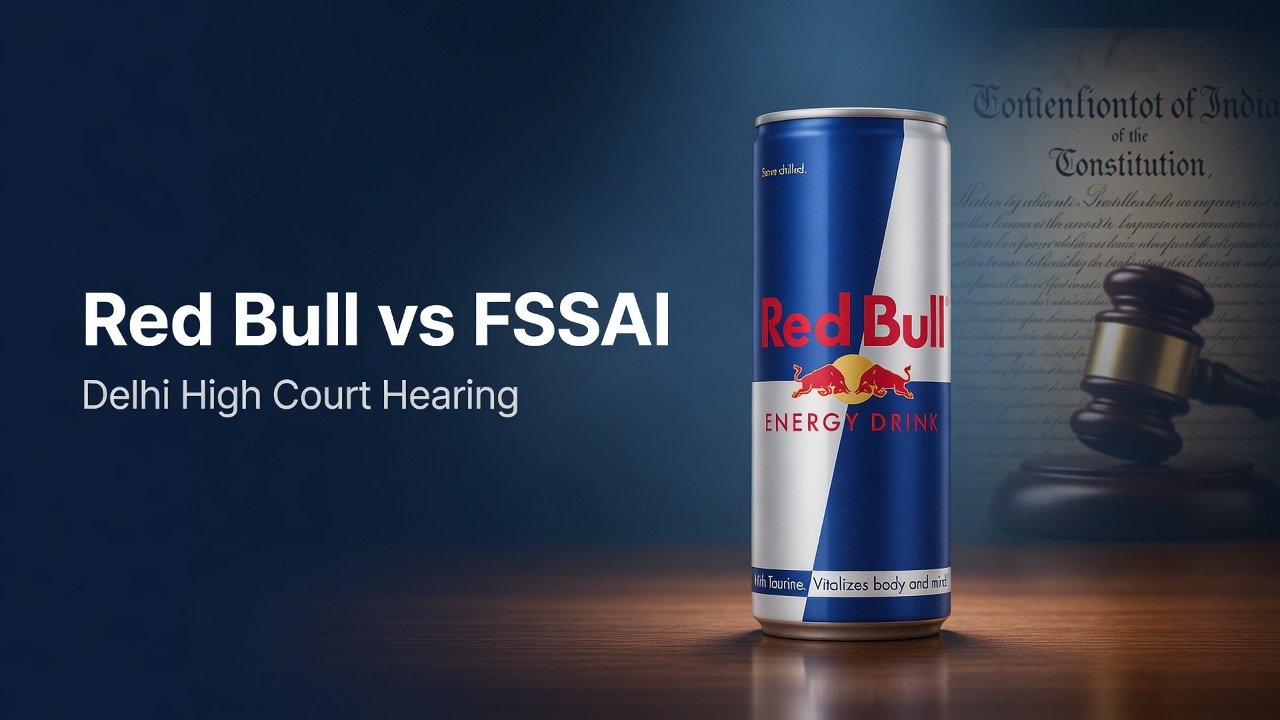
Red Bull Challenges FSSAI Over ‘Energy Drink’ Label in Delhi High Court
The Red Bull FSSAI case has brought the regulation of high-caffeine beverages into focus after Red Bull India challenged a Food Safety and Standards Authority of India (FSSAI) directive restricting the use of the term “Energy Drink” on its products.
Red Bull approached the Delhi High Court on September 25, arguing that FSSAI had prohibited the descriptor without first giving the company an adequate opportunity to respond. The dispute comes amid a wider regulatory push involving the labelling and marketing of caffeinated beverages in India.
The Delhi High Court subsequently set aside the June 30 FSSAI order, while leaving the regulator free to reconsider the matter after following the required procedure, including issuing a show-cause notice and giving Red Bull an opportunity to be heard. The court did not decide whether Red Bull’s products actually violate food-safety rules.
Why Red Bull Challenged the FSSAI Order
According to Red Bull’s petition, the company has used the “Energy Drink” descriptor for its products in India since 2002. It argued that the sudden restriction was introduced without a change to the underlying product standard and without adequate procedural safeguards.
Red Bull also said the move created regulatory uncertainty for its existing and planned investments in India. The company argued that removing a descriptor it has used for years could have significant implications for its business and distribution network.
The company further pointed to an earlier FSSAI advisory from March 2024, which it said had permitted the expression “Energy Drink” for products falling within the relevant category of caffeinated beverages.
What FSSAI Had Directed
On June 30, FSSAI directed Red Bull to discontinue the use of “Energy Drink” on its caffeinated beverage products. A subsequent July 17 communication asked food-safety authorities across states and Union Territories to take action against products considered non-compliant.
FSSAI’s position, as presented in court, was that the issue concerned the product description rather than the product itself. Its counsel argued that the word “energy drink” was the problem and that the regulator was seeking a change in the labelling.
The regulator also maintained that such beverages are regulated under the framework for caffeinated beverages and has raised concerns about labels or promotional claims that could give consumers a misleading impression about the benefits of consuming the products.
Delhi High Court Sets Aside the Order
The Delhi High Court’s ruling focused on the procedure followed by FSSAI rather than determining the scientific or regulatory merits of the “Energy Drink” label.
Justice Amit Mahajan observed that Red Bull had not been given an opportunity to file a reply or provide an explanation before the June 30 direction was issued. The court therefore set aside the order.
The court also left the matter open for FSSAI to take a fresh decision after following due process. That means the ruling does not permanently establish that Red Bull can use the “Energy Drink” descriptor regardless of future regulatory action.
Importantly, the court did not determine whether Red Bull’s products breach the FSSAI Act or other applicable food regulations.
FSSAI Can Reconsider the Matter
The court’s decision gives Red Bull immediate relief from the June 30 order, but the regulatory dispute may continue.
FSSAI can issue a fresh notice, hear Red Bull’s response and then make another decision based on the applicable food-safety and labelling regulations. Reuters reported that the regulator is expected to defend its position and could appeal the court’s decision.
This makes the case less about a final ruling on the terminology and more about whether the regulator followed the required legal process before imposing the restriction.
Why the Case Matters to India’s Energy Drink Industry
The Red Bull FSSAI case has implications beyond one brand because other major beverage companies have also been affected by the regulatory shift.
PepsiCo, Monster Beverage and Reliance are among companies whose products and marketing have been affected by the debate over the “energy drink” descriptor. However, Red Bull is the company that took the issue to the Delhi High Court.
The dispute is significant because India’s energy beverage market has expanded rapidly. Reuters, citing Euromonitor, reported that retail sales of energy drinks in India were growing at around 12.6% annually, faster than the US and China, with the market projected to reach about $1.6 billion by 2028.
For beverage companies, the terminology used on packaging can influence how products are positioned, distributed and recognised by consumers. Any change in labelling requirements can therefore have commercial consequences even when the underlying formulation remains unchanged.
India’s Rules for Caffeinated Beverages
FSSAI’s existing regulatory framework contains specific requirements for caffeinated beverages.
The FSSAI regulations prescribe total caffeine levels for carbonated and non-carbonated caffeinated beverages and require a declaration advising consumers not to consume more than 500 ml per day. The rules also specify limits for certain optional ingredients, including taurine and D-glucurono-Y-lactone.
The regulatory debate around the “Energy Drink” terminology is therefore connected to a broader question about how high-caffeine products should be categorised and presented to consumers.
FSSAI has previously examined the issue of energy drinks and discussed whether separate standards and labelling requirements should be developed for such products.
What Happens Next in the Red Bull FSSAI Case?
The immediate effect of the Delhi High Court ruling is that the June 30 directive against Red Bull’s use of the “Energy Drink” descriptor has been set aside.
However, FSSAI can reconsider the matter after providing Red Bull with the required opportunity to respond. The regulator’s next steps, including any fresh notice or decision, will determine how the dispute develops.
For Red Bull, the case also highlights the importance of regulatory certainty for a major consumer brand operating in India’s rapidly expanding beverage market.
For the wider industry, the outcome could provide further clarity on how terms such as “Energy Drink” can be used on products containing significant levels of caffeine and other functional ingredients.
Frequently Asked Questions
1. Why did Red Bull approach the Delhi High Court?
Red Bull challenged an FSSAI directive restricting its use of the term “Energy Drink” on caffeinated beverages. The company argued that the decision was issued without giving it an adequate opportunity to respond.
2. What did FSSAI order Red Bull to do?
FSSAI directed Red Bull to discontinue using the “Energy Drink” descriptor on its relevant caffeinated beverage products.
3. Did the Delhi High Court permanently approve the “Energy Drink” label?
No. The court set aside the FSSAI order because Red Bull had not been given an opportunity to present its case. It left FSSAI free to take a fresh decision after following due process.
4. Did the court rule that Red Bull’s products are legally compliant?
No. The court did not examine the merits of whether Red Bull’s products violate the FSSAI Act or whether FSSAI ultimately has the power to restrict the descriptor.
5. When did Red Bull start using the “Energy Drink” descriptor in India?
Red Bull said in its court petition that it has used the “Energy Drink” descriptor for its products in India since 2002.
6. Are other beverage companies affected by the FSSAI dispute?
Yes. Companies including PepsiCo, Monster Beverage and Reliance have also been affected by the regulatory shift concerning high-caffeine beverages and the “energy drink” description.
7. Does FSSAI regulate caffeine in beverages?
Yes. FSSAI regulations prescribe caffeine requirements for carbonated and non-carbonated caffeinated beverages, along with other labelling and consumption requirements.
8. What is the daily consumption declaration for caffeinated beverages?
The applicable FSSAI regulations require a declaration stating that consumers should not consume more than 500 ml of the caffeinated beverage per day.
9. Can FSSAI take another decision against Red Bull?
Yes. The Delhi High Court left it open for FSSAI to reconsider the issue after following due process, including giving Red Bull an opportunity to be heard.
10. Why is the Red Bull FSSAI case important?
The case could provide greater clarity around the regulatory treatment and labelling of high-caffeine beverages in India, while also illustrating the procedural requirements regulators must follow when taking enforcement action.

