
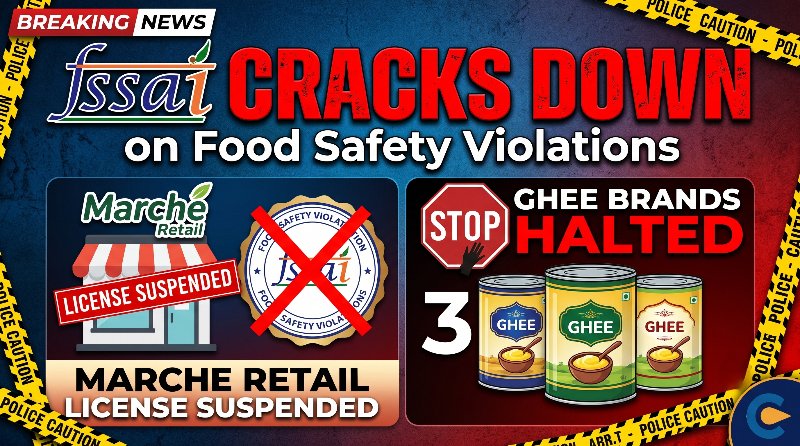
FSSAI Cracks Down on Food Safety Violations: Marche Retail License Suspended, 3 Ghee Brands Halted
The FSSAI food safety action has put the spotlight back on food safety compliance in India’s retail and food industry. The Food Safety and Standards Authority of India (FSSAI) has suspended the license of Delhi-based Marche Retail Pvt Ltd for 30 days over food safety compliance issues.
In a separate regulatory action, FSSAI has also halted the sale of three ghee brands — Shraddha, Shree Saras and Gokul — manufactured by Daman-based SDP Industries.
The latest action highlights the importance of following food safety regulations at every stage, from manufacturing and storage to distribution and retail.
FSSAI Suspends Marche Retail License for 30 Days
As part of its latest FSSAI food safety action, the regulator has suspended the license of Marche Retail Pvt Ltd, a Delhi-based company.
The suspension will remain in place for 30 days and is linked to food safety compliance issues identified by the regulatory authorities.
For a food retailer, maintaining an active FSSAI license is an important part of operating within India’s food safety framework. Businesses handling food products are expected to follow prescribed standards covering areas such as hygiene, storage, handling and overall food safety compliance.
A license suspension can therefore have a direct impact on a company’s ability to continue its food-related operations during the suspension period.
Sale of Three Ghee Brands Halted
FSSAI has also taken action involving three ghee brands manufactured by SDP Industries in Daman.
The brands named in the regulatory action are:
- Shraddha
- Shree Saras
- Gokul
The sale of these three ghee brands has been halted as part of the regulatory action.
Ghee is a widely consumed dairy product in Indian households, making quality and food safety compliance particularly important. Regulatory action involving ghee products can therefore attract significant attention from both consumers and the food industry.
Why FSSAI Action Matters
The latest FSSAI food safety action highlights the role of regulatory checks in protecting consumers and maintaining standards across India’s food supply chain.
Food products pass through several stages before reaching consumers. A problem at the manufacturing, storage, distribution or retail level can potentially affect product quality and consumer safety.
Regulatory authorities such as FSSAI are responsible for enforcing food safety standards and taking action when businesses fail to meet the required requirements.
Such measures can also encourage food businesses to review their internal compliance systems and ensure that required standards are consistently followed.
What Does a License Suspension Mean for a Food Business?
An FSSAI license is an important regulatory requirement for food businesses operating in India.
When a license is suspended, the affected business faces restrictions during the suspension period. The action can also create reputational pressure, particularly when the issue involves food safety compliance.
For companies operating in the food sector, compliance is therefore not just a regulatory formality. It is closely linked to consumer trust and the long-term credibility of the business.
What Consumers Should Know
Consumers should not panic simply because a regulatory action has been announced. Instead, they should pay attention to official notices and product-specific instructions issued by the relevant authorities.
When a particular product or brand is subject to regulatory restrictions, consumers should check whether the action applies to the product they have purchased and follow any official guidance regarding its use or sale.
It is also important to remember that regulatory action can involve different types of violations and restrictions. Consumers should rely on official information rather than unverified claims circulating on social media.
Food Safety Compliance Is Becoming More Important
India’s food industry has expanded rapidly, with packaged foods, dairy products, online grocery platforms and organised retail becoming increasingly common.
With this growth comes the need for stronger compliance.
Food manufacturers and retailers need to maintain proper documentation, follow hygiene standards, ensure appropriate storage conditions and comply with applicable food safety requirements.
The latest action involving Marche Retail and the three ghee brands is another reminder that regulatory compliance remains an important responsibility for food businesses.
FSSAI Action Sends a Clear Message to the Industry
The action against Marche Retail and the restrictions involving products manufactured by SDP Industries show that food safety regulators can intervene when compliance concerns arise.
For food businesses, the message is straightforward: regulatory requirements cannot be treated as optional.
Companies need to ensure that their manufacturing, distribution and retail operations meet the standards required by law. Strong compliance systems can help businesses avoid regulatory action while also protecting consumer confidence.
The latest FSSAI food safety action has resulted in a 30-day license suspension for Delhi-based Marche Retail Pvt Ltd and a halt on the sale of three ghee brands — Shraddha, Shree Saras and Gokul — manufactured by Daman-based SDP Industries.
The developments highlight why food safety compliance remains important across India’s food industry. For consumers, the key is to follow official regulatory updates and product-specific instructions, while food businesses must ensure that their operations continue to meet the required safety standards.
As India’s packaged food and organised retail sectors continue to grow, maintaining strong food safety standards will remain essential for protecting consumers and building trust.
Frequently Asked Questions (FAQs)
1. What is the latest FSSAI food safety action?
FSSAI has suspended the license of Delhi-based Marche Retail Pvt Ltd for 30 days over food safety compliance issues. The regulator has also halted the sale of three ghee brands manufactured by SDP Industries.
2. Why was Marche Retail’s FSSAI license suspended?
Marche Retail’s license was suspended for 30 days due to food safety compliance issues identified by the regulatory authority.
3. Which ghee brands have been affected by the FSSAI action?
The three ghee brands named in the action are Shraddha, Shree Saras and Gokul.
4. Who manufactures the three ghee brands?
The three ghee brands are manufactured by SDP Industries, which is based in Daman.
5. Has FSSAI stopped the sale of the three ghee brands?
Yes. According to the information provided, FSSAI has halted the sale of Shraddha, Shree Saras and Gokul ghee manufactured by SDP Industries.
6. How long is Marche Retail’s license suspended?
The FSSAI license of Marche Retail Pvt Ltd has been suspended for 30 days.
7. What does FSSAI do?
The Food Safety and Standards Authority of India (FSSAI) is India’s food safety regulator. It is responsible for establishing and enforcing standards related to food safety and regulating food businesses.
8. What should consumers do after an FSSAI action?
Consumers should rely on official FSSAI or government updates and follow any specific instructions issued regarding affected products. They should avoid relying on unverified claims circulating online.
9. Why is FSSAI compliance important for food businesses?
FSSAI compliance helps ensure that food businesses follow applicable safety, hygiene, handling, storage and quality requirements. It also plays an important role in maintaining consumer confidence in food products.

