
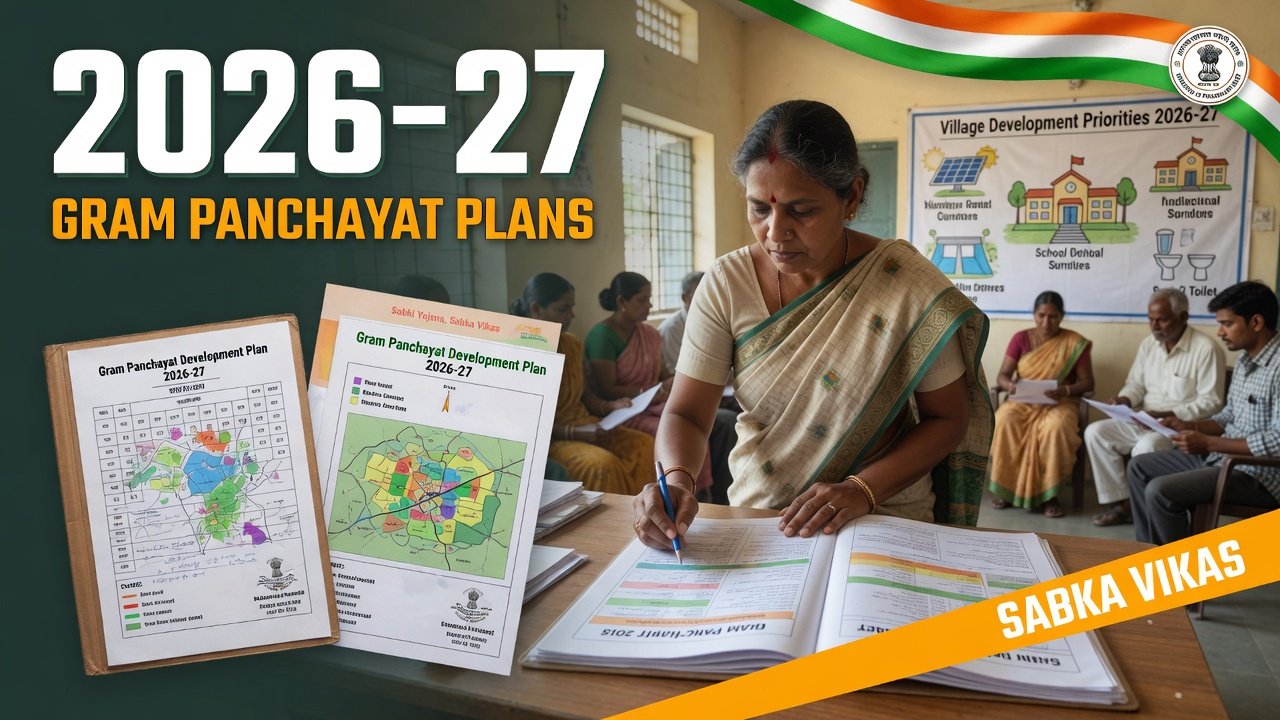
Sabki Yojana, Sabka Vikas 2026-27 Campaign Launched Nationwide for Gram Panchayat Development Plans
The Sabki Yojana, Sabka Vikas 2026-27 campaign has been launched nationwide on October 2, 2026, with special Gram Sabhas being held across India to begin the process of preparing Gram Panchayat Development Plans (GPDPs) for the financial year 2027-28.
The People’s Plan Campaign (PPC), led by the Ministry of Panchayati Raj, is designed to bring citizens, elected representatives and local officials into the village-level development planning process. The 2026-27 campaign is focused on participatory and evidence-based planning, with Gram Sabhas expected to identify local development gaps and set priorities for their respective villages.
Sabki Yojana, Sabka Vikas 2026-27 Begins on Gandhi Jayanti
The launch of Sabki Yojana, Sabka Vikas 2026-27 coincides with Gandhi Jayanti, when special Gram Sabhas are being convened across the country.
According to the Ministry of Panchayati Raj, the meetings will review the implementation and benefits of important government schemes, identify gaps in public services and discuss development priorities at the village level. These discussions will form the starting point for preparing GPDPs for 2027-28.
The campaign is part of an annual planning exercise that has been conducted since 2018 under the People’s Plan Campaign.
Gram Panchayats to Prepare Plans for FY 2027-28
A key point about the new campaign is the financial year covered by the plans.
While the campaign itself is called PPC 2026-27, the Gram Panchayat Development Plans being prepared through the exercise are for financial year 2027-28. The Ministry has described the process as participatory and evidence-based, with village-level discussions helping determine development priorities for the upcoming financial year.
This planning cycle allows Panchayats to assess existing development work before deciding which projects, services and interventions should receive attention in the following financial year.
What Will Happen in the Gram Sabhas?
The special Gram Sabhas will provide a forum for residents and local representatives to discuss the conditions and development requirements of their villages.
The discussions can include:
- Review of government schemes and their implementation
- Identification of gaps in public services
- Discussion of local infrastructure requirements
- Prioritisation of village development activities
- Identification of local livelihood and social-development needs
- Discussion of available resources and possible convergence of schemes
- Participation of citizens and different community groups in local planning
The objective is to ensure that development plans reflect conditions and priorities identified at the grassroots rather than being prepared solely through administrative processes.
Evidence-Based Planning Through Panchayat Data
The Sabki Yojana, Sabka Vikas 2026-27 campaign also places emphasis on using available data to identify development gaps.
The Panchayat Advancement Index (PAI) is one of the tools used in the Panchayati Raj planning framework. It assesses Panchayat-level progress across different development themes and can help identify areas requiring greater attention.
The Ministry’s planning framework also integrates digital platforms, including eGramSwaraj, into the Panchayat Development Plan process.
This approach is intended to connect local discussions with measurable development indicators and available government resources.
Focus on Better Coordination of Government Schemes
Another important element of the campaign is the convergence of different government programmes at the Panchayat level.
Gram Sabha discussions can bring together information about schemes being implemented by different government departments. This allows Panchayats to consider how various programmes and funding sources can contribute to common village development priorities.
The Ministry has described the 2026-27 campaign as following a broader whole-of-government approach, with discussions covering areas such as rural development, water and sanitation and other public services.
Such coordination is particularly relevant for villages where multiple development needs overlap, such as water supply, sanitation, roads, livelihoods and social services.
More Than 2.55 Lakh Gram Panchayats Involved
The scale of the exercise is nationwide. More than 2.55 lakh Gram Panchayats prepare and upload their plans through the Panchayat planning system, according to the government.
The large number of participating Panchayats makes the campaign one of the country’s major recurring exercises in decentralised development planning.
The process also involves multiple levels of the Panchayati Raj system, with planning frameworks covering Gram Panchayats, Block Panchayats and District Panchayats.
Role of Citizens in Local Development Planning
Citizen participation is at the centre of the Sabki Yojana, Sabka Vikas 2026-27 campaign.
Gram Sabha meetings provide residents with an opportunity to raise local concerns and discuss which development activities should receive priority. The process also involves elected Panchayat representatives, frontline workers, Self-Help Groups, community organisations and other stakeholders.
The Ministry’s campaign framework emphasises inclusive participation and evidence-based identification of development gaps.
This can allow local development plans to incorporate issues that may not be fully visible through administrative data alone.
Campaign Builds on Earlier Planning Exercises
The People’s Plan Campaign was launched in 2018 under the theme “Sabki Yojana, Sabka Vikas.” It has since been conducted annually to support participatory preparation of Panchayat Development Plans.
For the previous cycle, the 2025-26 campaign initiated preparation of Panchayat Development Plans for FY 2026-27. The government reported that more than 18.13 lakh Panchayat Development Plans had been uploaded between 2019-20 and 2025-26 as of July 29, 2025, including more than 17.73 lakh Gram Panchayat Development Plans.
The new campaign therefore continues an established annual planning mechanism while beginning the process for the next financial year.
Digital Platforms to Support the Planning Process
Digital systems are increasingly being used to support Panchayat-level planning and monitoring.
The eGramSwaraj platform is used for Panchayat planning and related information, while other digital tools support Gram Sabha proceedings and Panchayat-level governance.
The campaign framework also encourages the use of the Panchayat Advancement Index to identify gaps and improve the quality of development plans.
Digital records can also make it easier to track planned activities, available resources and implementation progress.
What the Campaign Means for Rural Development
The launch of Sabki Yojana, Sabka Vikas 2026-27 begins the next cycle of village-level development planning across India.
Rather than treating Panchayat plans as isolated administrative documents, the campaign seeks to connect them with local needs, government schemes, available resources and measurable development indicators.
The immediate focus is now on conducting Gram Sabha discussions, identifying priorities and preparing the development plans that will guide Panchayat-level activities for FY 2027-28.
As the campaign progresses, the quality of participation, identification of local gaps and coordination between Panchayats and government departments will be important components of the planning process.
FAQs
1. What is Sabki Yojana, Sabka Vikas 2026-27?
Sabki Yojana, Sabka Vikas 2026-27 is the latest cycle of the government’s People’s Plan Campaign, which promotes participatory preparation of Panchayat Development Plans through Gram Sabha discussions.
2. When was Sabki Yojana, Sabka Vikas 2026-27 launched?
The campaign was launched on October 2, 2026, coinciding with Gandhi Jayanti and special Gram Sabha meetings across the country.
3. What are Gram Panchayat Development Plans?
Gram Panchayat Development Plans, or GPDPs, are local development plans prepared by Gram Panchayats based on village needs, available resources and development priorities.
4. Which financial year will the new plans cover?
The PPC 2026-27 campaign will facilitate preparation of Gram Panchayat Development Plans for FY 2027-28.
5. What is the role of Gram Sabha in the campaign?
Gram Sabhas provide a platform for citizens and local representatives to review government programmes, identify local gaps and discuss priorities for village development.
6. How many Gram Panchayats are involved?
More than 2.55 lakh Gram Panchayats prepare and upload development plans through the Panchayat planning system.
7. What is the Panchayat Advancement Index?
The Panchayat Advancement Index, or PAI, is a framework used to assess development progress and identify gaps at the Panchayat level. It can support evidence-based planning.
8. Is Sabki Yojana, Sabka Vikas a new initiative?
No. The People’s Plan Campaign was launched in 2018 under the “Sabki Yojana, Sabka Vikas” theme and has been conducted annually.
9. Which issues can be discussed during Gram Sabha meetings?
Issues can include public services, infrastructure, water and sanitation, livelihoods, social development, implementation of government schemes and other local development priorities.
10. Which ministry is responsible for the campaign?
The Ministry of Panchayati Raj is leading the People’s Plan Campaign and the Panchayat Development Plan process.

