
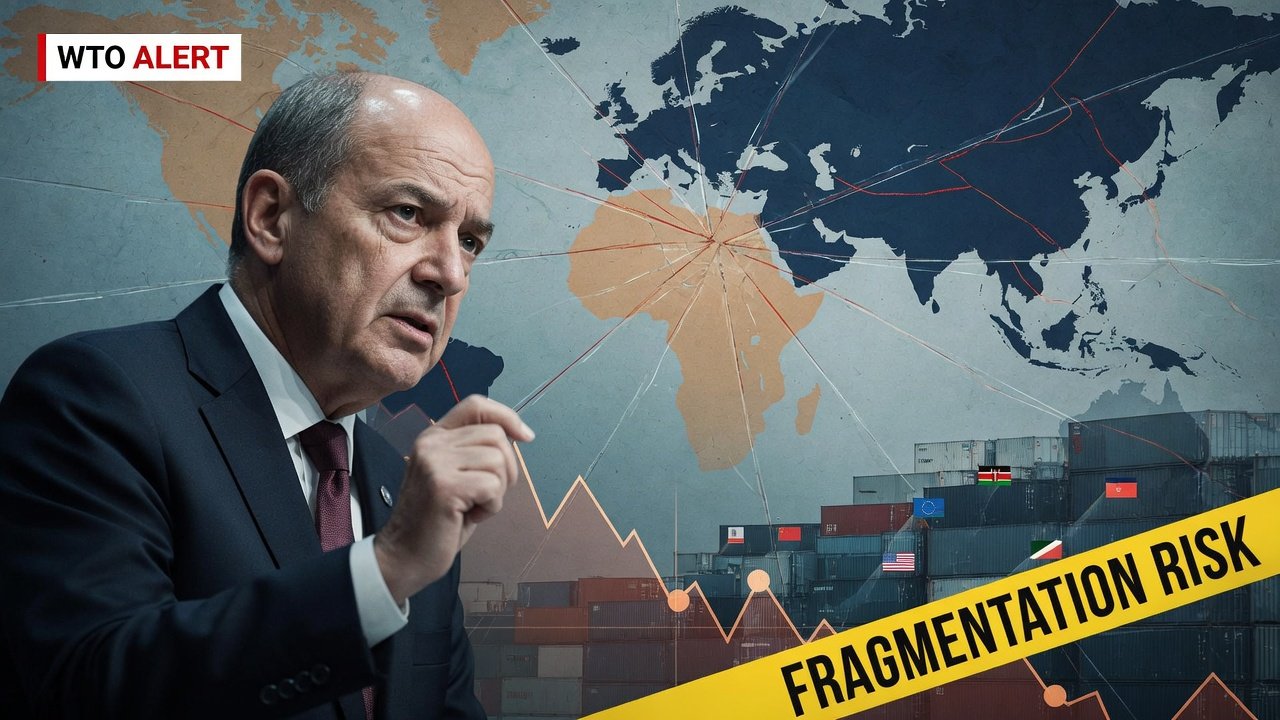
WTO Warning on Global Trade: Trade Fragmentation Could Hit Poor Economies Hardest
The WTO Warning on Global Trade has highlighted growing concerns over trade fragmentation and the increasing division of the global economy into geopolitical blocs. The World Trade Organization has warned that a more fragmented international trading system could have particularly serious consequences for the world’s poorest economies.
Global trade has faced increasing pressure from geopolitical tensions, tariffs, export restrictions, supply-chain disruptions and changes in trade policies. While wealthier economies may have greater financial and institutional capacity to adjust to these changes, poorer countries often have fewer alternatives when access to major markets or suppliers is disrupted.
The WTO’s warning comes as governments and businesses continue to reassess their international supply chains and trading relationships amid a changing global economic environment.
WTO Warning on Global Trade: What Is Trade Fragmentation?
Trade fragmentation refers to a situation in which international commerce becomes divided into separate economic groups or blocs rather than operating through an increasingly integrated global market.
In a fragmented trading environment, countries may increasingly trade with geopolitical partners while reducing their dependence on countries outside their alliances.
This can involve higher tariffs, trade restrictions, investment controls, export limitations and policies designed to shift production closer to home or toward politically aligned partners.
Although such measures can be introduced for economic, national-security or strategic reasons, they can also increase the cost of international trade and make it more difficult for countries to access markets, technology and investment.
Why Poorer Economies Face Greater Risks
The impact of global trade fragmentation is unlikely to be evenly distributed.
Developing and low-income economies often depend heavily on international trade for exports, imports, investment and employment. Many also rely on a limited number of products or trading partners.
If major economies divide into competing trade blocs, smaller economies could face pressure to choose sides or adapt to different regulatory and market requirements.
Countries with smaller domestic markets and limited financial resources may find it more difficult to replace lost trading partners or develop alternative supply chains.
This can make trade fragmentation particularly challenging for economies that depend on global markets to support economic growth.
Geopolitical Blocs Could Reshape International Trade
The WTO’s concerns come against the backdrop of increasing geopolitical competition between major economies.
Trade relationships are increasingly influenced by strategic considerations involving technology, energy, critical minerals, manufacturing and national security.
Governments are also seeking greater control over strategically important supply chains.
These developments can encourage companies to diversify suppliers and production locations. However, if diversification develops into broader economic separation, international trade could become less efficient and more expensive.
For poorer economies, the consequences could include weaker export opportunities and reduced access to foreign investment.
Global Supply Chains Are Already Changing
Businesses around the world have been adjusting their supply chains in response to geopolitical uncertainty and disruptions.
Companies are increasingly considering factors beyond production costs when selecting manufacturing and sourcing locations. Supply-chain resilience, political stability, transportation security and access to key markets have become increasingly important.
This has contributed to discussions around friend-shoring, near-shoring and reshoring.
Friend-shoring involves moving supply chains toward countries considered politically reliable, while near-shoring involves locating production closer to major markets. Reshoring refers to bringing production back to the company’s home country.
These strategies can reduce certain risks for businesses, but widespread adoption could also reduce the role of countries that are outside major economic blocs.
Impact on Trade-Dependent Countries
Many developing economies rely on exports of agricultural products, minerals, energy resources, manufactured goods and services.
International trade provides these countries with access to larger consumer markets and foreign currency earnings.
If global trade becomes divided into regional or geopolitical groups, countries that are highly dependent on international commerce could experience greater uncertainty.
Exporters may have to comply with multiple sets of regulations or face higher tariffs when entering different markets.
At the same time, disruptions to imports can increase the cost of machinery, technology, energy and essential industrial inputs.
Trade Fragmentation Could Affect Investment
Foreign direct investment is another area that could be affected by increased economic fragmentation.
Multinational companies often select investment locations based on market access, production costs, infrastructure, workforce availability and supply-chain connectivity.
If international trade becomes increasingly organized around geopolitical blocs, companies could prioritize investment in countries that have preferential access to their main markets or strategic partners.
For poorer economies, losing access to investment could make it harder to develop infrastructure, manufacturing capacity and higher-value industries.
This could have longer-term implications for productivity and employment.
Technology Trade Is an Important Factor
Technology is another major area where geopolitical competition is affecting international commerce.
Restrictions involving advanced technologies, semiconductors, artificial intelligence-related equipment and other strategic products have become an important part of international economic policy.
For developing economies, access to technology is important for improving productivity and moving into higher-value manufacturing and services.
Greater restrictions or divided technology ecosystems could increase the cost of accessing advanced technologies and make it harder for some countries to participate in global value chains.
What Could Happen to Global Trade?
A highly fragmented global economy could lead to several changes in international commerce.
These could include:
- Higher trade costs
- More regional supply chains
- Increased tariffs and trade restrictions
- Reduced market access for some developing economies
- Greater pressure on countries to align with economic blocs
- Higher costs for imported goods and technology
- Changes in foreign investment patterns
- More complicated international regulations
The extent of these effects would depend on how governments approach trade policies and whether countries continue cooperating through multilateral institutions.
WTO’s Role in the Global Trading System
The World Trade Organization plays a central role in establishing and supporting rules governing international trade.
The organization provides a forum for trade negotiations, monitors trade policies and provides mechanisms for resolving certain trade disputes between members.
Multilateral trade rules are particularly important for smaller economies because they provide a framework through which countries can access international markets.
A weakening of multilateral trade cooperation could therefore create additional challenges for economies that have less negotiating power individually.
Why Multilateral Cooperation Matters
The WTO’s warning also highlights the importance of maintaining cooperation between countries.
International trade can provide developing economies with opportunities to specialize, attract investment and participate in global supply chains.
If countries continue to maintain open and predictable trading relationships, businesses can make longer-term investment decisions and countries can benefit from access to larger markets.
However, continued geopolitical tensions could make cooperation more difficult.
The challenge for policymakers is balancing national economic and security priorities with the broader benefits of an interconnected global trading system.
Developing Economies Need Greater Resilience
The risks associated with trade fragmentation also underline the importance of strengthening domestic economic resilience in developing countries.
Governments can seek to diversify export markets, develop domestic industries, improve infrastructure and invest in education and skills.
Diversification can reduce dependence on a small number of products or trading partners.
At the same time, maintaining access to international markets remains important because domestic demand alone may not be sufficient to support large-scale economic development in many smaller economies.
India and Other Emerging Economies
The global trade debate is also relevant to emerging economies such as India.
Countries seeking to expand manufacturing and exports need access to international markets, investment, technology and reliable supply chains.
At the same time, governments are increasingly looking to strengthen domestic production in strategically important sectors.
The balance between domestic manufacturing and participation in global trade will therefore remain an important economic policy issue for emerging markets.
Looking Ahead
The WTO Warning on Global Trade highlights a broader concern about the consequences of increasing economic fragmentation.
If geopolitical tensions lead to a sustained division of the global economy into competing trade blocs, poorer countries could face greater difficulties accessing markets, investment, technology and supply chains.
Wealthier economies generally have more resources to adapt to changes in international trade. Smaller and poorer economies may have fewer alternatives when major trading relationships are disrupted.
The future of global trade will therefore depend not only on individual countries’ policies but also on the extent to which governments maintain cooperation and predictable international trade rules.
FAQs
1. What is the WTO Warning on Global Trade about?
The WTO warning focuses on the risks associated with growing trade fragmentation and the division of the global economy into geopolitical blocs.
2. What is trade fragmentation?
Trade fragmentation occurs when international commerce becomes increasingly divided between separate economic or geopolitical groups, potentially reducing cooperation and increasing barriers to trade.
3. Why could trade fragmentation hurt poor countries more?
Poorer economies often have fewer trading partners, smaller domestic markets and limited resources to replace disrupted supply chains or lost export markets.
4. How can trade fragmentation affect consumers?
Greater trade barriers and disrupted supply chains can increase the cost of imported goods, raw materials, technology and other products.
5. Could trade fragmentation affect foreign investment?
Yes. Companies may increasingly direct investment toward countries that provide reliable access to major markets or are part of preferred geopolitical and economic networks.
6. What role does the WTO play in global trade?
The WTO provides a framework for international trade rules, supports trade negotiations, monitors trade policies and provides mechanisms for resolving certain trade disputes.
7. What are geopolitical trade blocs?
Geopolitical trade blocs are groups of countries whose economic and trade relationships become more closely connected because of strategic, political or economic alignment.
8. Can developing countries reduce the risks of trade fragmentation?
Countries can seek to diversify export markets and suppliers, strengthen infrastructure and domestic industries, invest in skills and maintain trade relationships with a broad range of international partners.

