
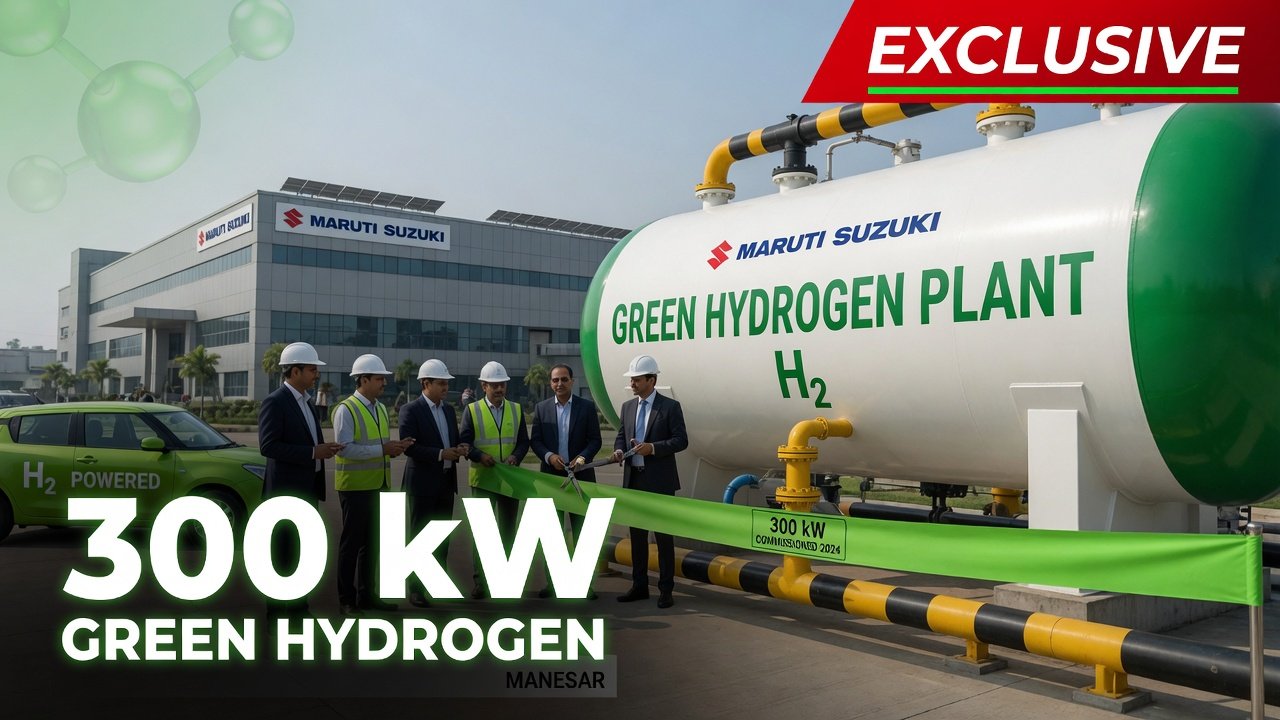
Maruti Suzuki’s Green Push: 300 kW Green Hydrogen Plant Commissioned at Manesar
Maruti Suzuki’s Green Push has gained another major milestone with the commissioning of a 300 kW green hydrogen electrolyser plant at the company’s Manesar manufacturing facility in Haryana. The pilot project is designed to convert surplus solar power into green hydrogen for use in manufacturing operations.
The initiative adds green hydrogen to Maruti Suzuki’s growing portfolio of renewable-energy and low-carbon manufacturing technologies, alongside solar power, biogas, compressed biogas and battery energy storage.
Maruti Suzuki Commissions 300 kW Green Hydrogen Plant
Maruti Suzuki India announced the commissioning of its first green hydrogen plant at Manesar on September 24, 2026.
The 300 kW electrolyser has been established as a pilot project. Instead of relying on electricity that would otherwise be needed for regular operations, the system is designed to make use of surplus solar energy generated at the Manesar facility.
According to Maruti Suzuki, solar power generated during holidays, when manufacturing activity is lower and some of the electricity could otherwise remain unused, will be used to produce green hydrogen.
The hydrogen is then stored for subsequent use in the company’s manufacturing operations.
How the Green Hydrogen System Will Work
The basic process connects Maruti Suzuki’s existing solar infrastructure with hydrogen production.
Surplus solar electricity powers the electrolyser, which produces hydrogen. The hydrogen is subsequently stored and blended with natural gas before being used as a process fuel in manufacturing.
This approach allows the company to use renewable electricity that might otherwise have limited utilisation during periods of lower factory activity.
Maruti Suzuki said the pilot will provide operational learnings that could help determine how green hydrogen can be adopted more widely across its manufacturing network.
Manesar Plant Becomes a Testbed for Green Hydrogen
The Manesar facility is an important part of Maruti Suzuki’s manufacturing network, making it a suitable location for testing new energy technologies.
The company has already expanded renewable-energy infrastructure at the site. In 2025, Maruti Suzuki added 10 MWp of solar capacity at Manesar as part of a wider 30 MWp expansion involving its Kharkhoda facility.
The company said its overall solar capacity had reached 79 MWp following those additions, with a longer-term target of 319 MWp by FY2030-31.
The green hydrogen electrolyser therefore builds on an existing renewable-power base rather than functioning as an isolated sustainability project.
Green Hydrogen to Support Manufacturing Operations
Green hydrogen is increasingly being explored as an alternative or complementary fuel for industrial processes that traditionally rely on fossil fuels.
In Maruti Suzuki’s pilot, the hydrogen will not directly replace natural gas across the manufacturing process. Instead, the company plans to blend green hydrogen with natural gas and use the mixture as process fuel.
The pilot approach allows Maruti Suzuki to assess the practical requirements of integrating hydrogen into manufacturing operations while gathering data on efficiency, energy utilisation and operational performance.
The company can then use those learnings when considering potential expansion.
Maruti Suzuki Plans Wider Green Hydrogen Adoption
The Manesar project is being positioned as a starting point rather than the company’s final green hydrogen installation.
Maruti Suzuki said that, based on the learnings from the pilot, it plans to scale up green hydrogen technology across manufacturing facilities in Haryana and Gujarat.
Such expansion could allow the company to test the technology across different manufacturing environments and energy requirements.
The strategy also reflects a broader shift toward using multiple renewable and lower-carbon energy sources instead of relying on a single technology.
Maruti Suzuki’s Wider Clean Energy Strategy
The green hydrogen project is one part of Maruti Suzuki’s wider effort to reduce emissions from manufacturing.
The automaker has invested in solar power generation and renewable electricity procurement, while also developing projects involving biogas and compressed biogas.
Maruti Suzuki is also in the advanced stages of setting up a 10-tonnes-per-day biogas plant at its Kharkhoda facility, which the company expects to commission during FY2026-27.
It has additionally commissioned a 1 MWh battery energy storage system at Kharkhoda and approved four compressed biogas projects with a combined budget of ₹561 crore.
Carbon Reduction Target
Maruti Suzuki has linked its clean-energy investments to a broader effort to reduce the carbon intensity of its manufacturing operations.
The company said it aims to reduce its manufacturing carbon footprint from approximately 615,000 tonnes to 266,000 tonnes by FY2030-31.
The target is being pursued through a combination of technologies rather than green hydrogen alone.
Solar energy, biogas, compressed biogas, battery storage and green hydrogen are all being incorporated into the company’s broader energy strategy.
Why Surplus Solar Power Matters
One of the notable aspects of Maruti Suzuki’s project is the way it addresses renewable-energy utilisation.
Solar generation can vary depending on operating schedules and electricity demand. During holidays or periods of lower manufacturing activity, some on-site solar generation may not be consumed immediately.
Using surplus electricity to produce hydrogen creates a way to store renewable energy in another form.
The hydrogen can then be used later as a manufacturing fuel, allowing the company to connect renewable electricity generation with industrial energy requirements.
Green Hydrogen and India’s Manufacturing Transition
The project also comes as India promotes the development and adoption of green hydrogen through its national energy strategy.
For manufacturers, green hydrogen can potentially provide another pathway to reduce dependence on conventional fossil fuels in industrial applications.
However, large-scale adoption depends on factors including electrolyser costs, renewable-energy availability, hydrogen storage and handling, infrastructure, efficiency and the economics of replacing or blending conventional fuels.
Maruti Suzuki’s pilot could therefore provide practical information about the challenges and opportunities involved in deploying the technology at an automotive manufacturing facility.
What Comes Next for Maruti Suzuki
The immediate focus will be on operating the 300 kW pilot and evaluating its performance.
The data gathered at Manesar could influence future investment decisions and determine how quickly the technology can be expanded to other Maruti Suzuki manufacturing facilities.
The company is simultaneously expanding its renewable-energy capacity and exploring other lower-carbon fuels.
With the Manesar green hydrogen plant now operational, Maruti Suzuki’s Green Push is moving beyond renewable electricity generation toward using clean energy directly in industrial manufacturing processes.
If the pilot delivers the expected operational benefits, green hydrogen could become another component of Maruti Suzuki’s long-term strategy for reducing the carbon intensity of vehicle production in India.
Frequently Asked Questions
1. What is Maruti Suzuki’s new green hydrogen project?
Maruti Suzuki has commissioned a 300 kW green hydrogen electrolyser plant as a pilot project at its Manesar manufacturing facility in Haryana.
2. How will Maruti Suzuki produce green hydrogen?
The electrolyser will use surplus solar power generated at the Manesar facility to produce green hydrogen.
3. Why is surplus solar power being used?
Solar energy generated during holidays or periods of lower factory activity could otherwise remain unused. The project allows some of that electricity to be converted into hydrogen and stored for later use.
4. How will the hydrogen be used?
The green hydrogen will be stored and blended with natural gas before being used as process fuel in Maruti Suzuki’s manufacturing operations.
5. Is the Manesar green hydrogen plant a commercial-scale project?
No. Maruti Suzuki describes the 300 kW facility as a pilot project designed to generate operational learnings.
6. Will Maruti Suzuki expand green hydrogen production?
The company said it plans to scale up green hydrogen technology across its manufacturing facilities in Haryana and Gujarat based on the results and learnings from the pilot.
7. What other clean-energy technologies is Maruti Suzuki using?
Maruti Suzuki is working with solar power, renewable electricity procurement, biogas, compressed biogas, battery energy storage and green hydrogen.
8. What is Maruti Suzuki’s carbon-reduction target?
The company aims to reduce its manufacturing carbon footprint from about 615,000 tonnes to 266,000 tonnes by FY2030-31.
9. Where is Maruti Suzuki’s green hydrogen plant located?
The 300 kW pilot electrolyser is located at Maruti Suzuki’s Manesar manufacturing facility in Haryana.
10. Why is the project important for Maruti Suzuki?
The project allows Maruti Suzuki to test how green hydrogen can be integrated into manufacturing operations while making greater use of surplus renewable electricity and supporting its longer-term emissions-reduction strategy.

