
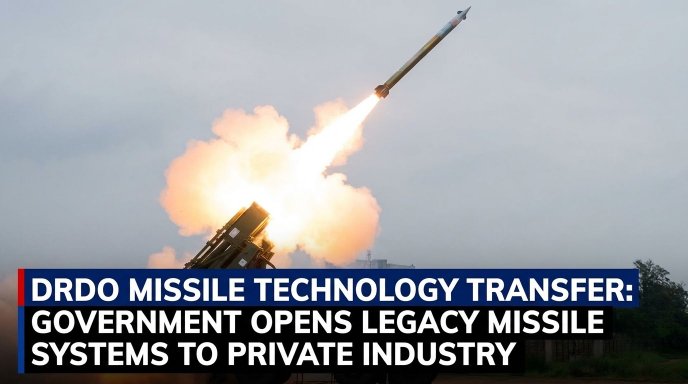
DRDO Missile Technology Transfer Opens Legacy Missile Systems to Private Industry
DRDO missile technology transfer is set to give India’s private defense industry a significant opportunity after the Ministry of Defence approved the transfer of technology for legacy DRDO missile systems to domestic private industries and MSMEs.
The move could change the way several indigenous defense systems are manufactured in India by allowing more private-sector companies to participate in their production.
One of the major beneficiaries could be systems such as the Akash missile, with the broader objective of increasing domestic manufacturing and strengthening India’s self-reliance in defense technology.
DRDO Missile Technology Transfer Gets Government Approval
The Ministry of Defence has approved the Technology Transfer (ToT) of legacy DRDO missile systems to eligible domestic private industries and MSMEs.
Technology transfer is an important part of the defense manufacturing ecosystem because it allows companies to gain access to the technical knowledge and capabilities required to manufacture established defense systems.
Instead of keeping production concentrated within a limited number of government-linked entities, the move can potentially create a much broader industrial base.
This could increase production capacity while also encouraging more private companies to enter the defense manufacturing sector.
Akash Missile Production Could Get a Major Boost
The Akash missile system is one of India’s prominent indigenous missile platforms and could benefit from the government’s decision.
Greater participation from private manufacturers could help expand production capacity and create a larger supply chain around the system.
For India, increasing domestic production of established missile systems has strategic importance.
It can reduce dependence on overseas suppliers and strengthen the country’s ability to manufacture critical defense equipment within its own industrial ecosystem.
What Is Technology Transfer in Defense?
Technology Transfer, commonly referred to as ToT, involves providing a company with the technical knowledge and manufacturing capabilities needed to produce a particular system.
In the defense sector, this can involve technical documentation, manufacturing processes, engineering information and other approved know-how required for production.
The exact scope of technology transfer can vary depending on the system and applicable government regulations.
For private companies, access to such technology can reduce the barriers involved in developing complex defense products from the ground up.
Why Private Industries Are Important
India’s defense manufacturing ecosystem has traditionally had a strong government presence.
However, private companies have increasingly become important contributors to the country’s defense production capabilities.
Large private manufacturers can bring significant investment, advanced manufacturing infrastructure and supply-chain expertise.
At the same time, MSMEs can contribute specialised components, engineering capabilities and niche technologies.
Creating stronger links between large companies and smaller suppliers can help develop a deeper domestic defense manufacturing ecosystem.
A Major Push for Atmanirbhar Bharat
The decision directly supports the broader Atmanirbhar Bharat objective in the defense sector.
Atmanirbhar Bharat, or self-reliant India, aims to increase domestic production and reduce excessive dependence on imports.
Defense is particularly important because relying heavily on foreign suppliers for critical military equipment can create strategic vulnerabilities.
By expanding domestic production capabilities, India can potentially improve supply security while also developing local expertise.
More Opportunities for Defense MSMEs
The move could be particularly important for India’s defense MSMEs.
Small and medium-sized companies often face challenges when entering highly specialised defense markets because developing sophisticated technologies independently can require substantial capital and technical expertise.
Access to approved DRDO technologies could lower some of those barriers.
MSMEs could potentially become part of larger production and supply chains, manufacturing components or systems under the relevant technology-transfer arrangements.
This could create new business opportunities across India’s defense manufacturing sector.
Potential Impact on Domestic Production
One of the biggest advantages of bringing more companies into missile production is the potential increase in manufacturing capacity.
A broader industrial base can provide additional production lines and suppliers.
This could become particularly valuable when the armed forces require larger quantities of indigenous systems.
It could also help manufacturers improve production efficiency as they gain experience and invest in specialised capabilities.
Could This Strengthen India’s Defense Exports?
Expanding domestic defense manufacturing could also support India’s long-term ambitions as a defense exporter.
India has increasingly sought to expand its defense exports and establish itself as a reliable supplier of military equipment.
Having a larger domestic manufacturing ecosystem can support this objective by increasing production capabilities and developing expertise across different areas of defense technology.
However, exports remain subject to government approvals, international regulations and strategic considerations.
Benefits Beyond Missile Production
The impact of the DRDO missile technology transfer could extend beyond the individual systems being transferred.
When companies begin manufacturing complex defense equipment, they often develop expertise in areas such as precision engineering, electronics, materials, testing and quality control.
These capabilities can potentially be applied to other defense and aerospace projects.
Over time, this can help create a stronger industrial ecosystem rather than simply increasing production of one particular missile system.
Challenges in Scaling Private Defense Manufacturing
While the government decision creates an opportunity, scaling defense manufacturing will still involve significant challenges.
Missile systems require extremely high standards of quality, reliability and testing.
Private companies entering the sector will need to build specialised facilities and develop teams with the necessary technical expertise.
They will also have to comply with defense procurement requirements, security standards and other regulatory conditions.
Therefore, the technology transfer is an important first step, but successfully turning it into large-scale production will require sustained investment and execution.
What This Means for India’s Defense Industry
The government’s decision sends a strong signal about the growing role of private industry in India’s defense sector.
Instead of viewing private companies only as suppliers of individual components, the ecosystem is moving towards giving them greater opportunities to participate in the manufacturing of sophisticated indigenous systems.
This could encourage more investment in defense technology and manufacturing.
It may also encourage startups and MSMEs to explore opportunities in areas that were previously difficult for private players to enter.
The Bigger Picture
The DRDO missile technology transfer initiative comes at a time when India is trying to build a more resilient and self-reliant defense manufacturing ecosystem.
The combination of DRDO’s technological capabilities and the manufacturing strength of India’s private sector could create a powerful model for scaling indigenous defense systems.
If implemented effectively, the initiative could increase domestic production, support defense MSMEs, create specialised jobs and strengthen India’s strategic manufacturing capabilities.
For the defense industry, the next important step will be seeing how quickly eligible companies can adopt the transferred technologies and move towards production.
Frequently Asked Questions (FAQs)
1. What is DRDO missile technology transfer?
DRDO missile technology transfer refers to the approved transfer of technology related to legacy DRDO missile systems to eligible domestic private industries and MSMEs for manufacturing.
2. Which missile systems could benefit from the technology transfer?
The initiative covers legacy DRDO missile systems, with indigenous platforms such as the Akash missile system being an important example.
3. Why is the DRDO ToT decision important?
It can allow more domestic companies to participate in defense manufacturing, potentially increasing production capacity and strengthening India’s indigenous defense industry.
4. How will private companies benefit from DRDO technology transfer?
Eligible companies can gain access to approved technical knowledge and manufacturing capabilities, reducing some of the barriers associated with developing complex defense systems independently.
5. What role will MSMEs play?
Defense MSMEs can potentially become important manufacturing and supply-chain partners by producing specialised components and systems under approved technology-transfer arrangements.
6. How does this support Atmanirbhar Bharat?
The initiative supports Atmanirbhar Bharat by encouraging domestic production of indigenous defense systems and reducing dependence on foreign sources for critical military equipment.
7. Could the move increase India’s defense production?
Yes. Allowing additional private manufacturers to participate could expand India’s industrial capacity and create a broader network of defense suppliers.
8. Could DRDO technology transfer help India’s defense exports?
A stronger domestic manufacturing ecosystem could support India’s long-term defense export ambitions by increasing production capabilities and developing specialised industrial expertise, subject to applicable government approvals and regulations.

